
Formative Adversity
The Setbacks That Shape Leaders

Competition Time
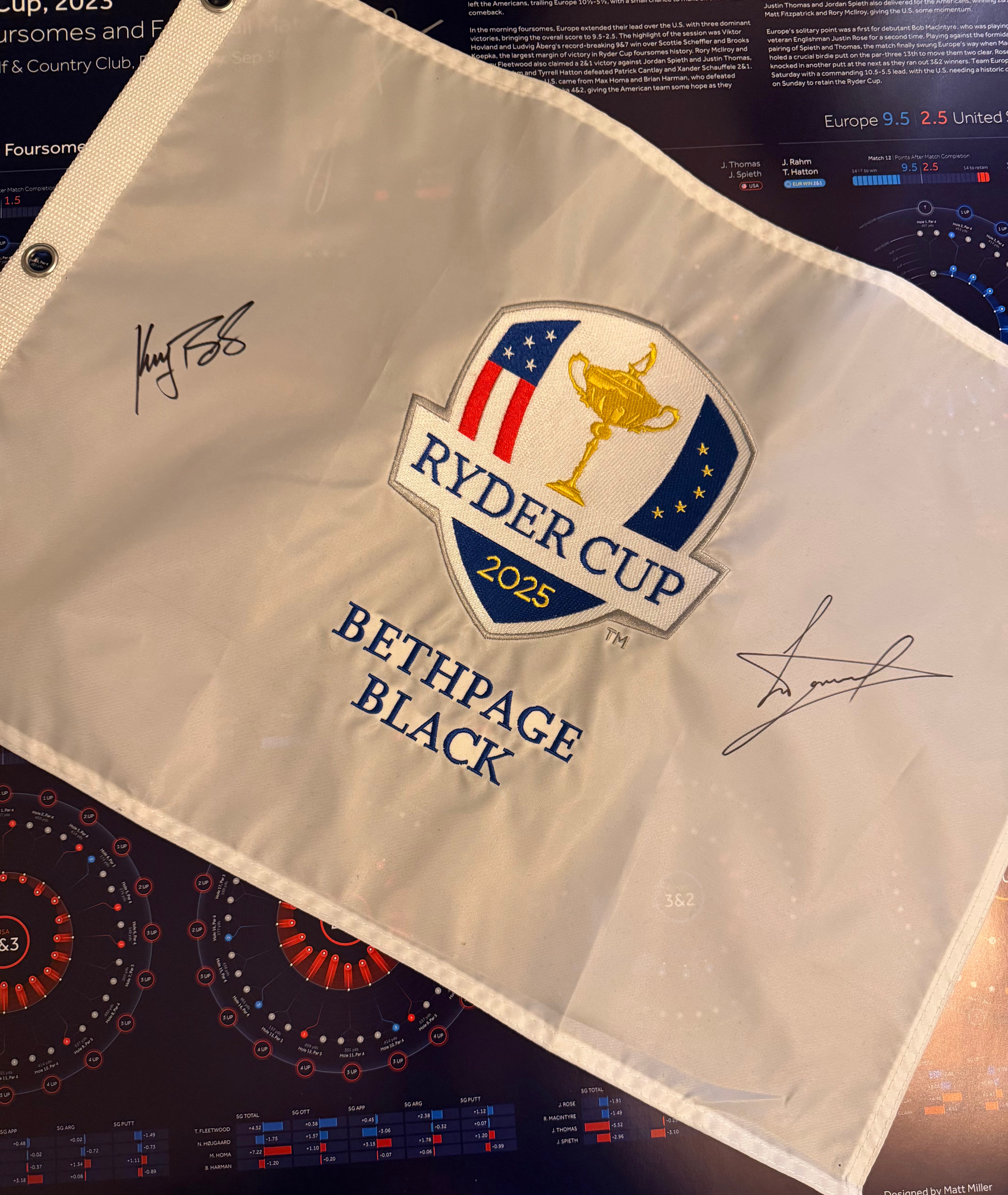
Before we get into this week’s article, I want to let you know that I’m running a little competition. I have a Ryder Cup flag to giveaway, signed by captains Luke Donald and Keegan Bradley. If you’re already subscribed, you don’t need to do anything, I will enter you automatically. If you’re not (and you’re reading this anyway), you’ll need to click the button here to enter:
Back to Business: Before the Spotlight
Resilience is often discussed once someone has already arrived. After the promotion, the big win, or the public failure everyone is talking about. We see it now in real time. Rúben Amorim leaving Manchester United after arriving with an exciting reputation built at Sporting CP. Scott Robertson stepping away from the New Zealand All Blacks role under player revolt. Brendon McCullum, celebrated for redefining England cricket through ‘Bazball’, now carrying a different kind of pressure that comes with raised expectations.

What the public sees in these moments is success or failure, often reduced to a headline. What is far less visible is the resilience that forms much earlier, before leadership philosophies are articulated and before anyone is really paying attention. The quieter setbacks that tempt us to quit, where doubt is loud and progress feels uncertain.
The stories in this chapter sit there. Not in the spotlight, but in the build-up to it. We focus on two our leaders, Gary Kirsten and Michael Maguire.
Formative Adversity
In Gary Kirsten’s case, the family name and their sporting reputation drove the development of an inner resilience that, in his words, “proved to people that I could be good enough to go out there and do things in my own right” from a young age.
He showed this resilience when his father Noel, who he had been living with at the time, suddenly passed away from stomach cancer. The eighteen-year-old Kirsten had to deal with his father’s passing and find a new place to live. He lodged with one of his teachers for six months and then moved around, before going on to settle and thrive at university.
Adversity is not reserved exclusively for sporting situations and does not discriminate between the personal and the professional.
The Dark Side of Batting
I asked Kirsten what it was like to go out to bat in the cauldron of international cricket. In response he outlined the two attributes that, in his opinion, a truly elite batsman possesses. The first was a foundation of technique able to withstand any type of bowling.
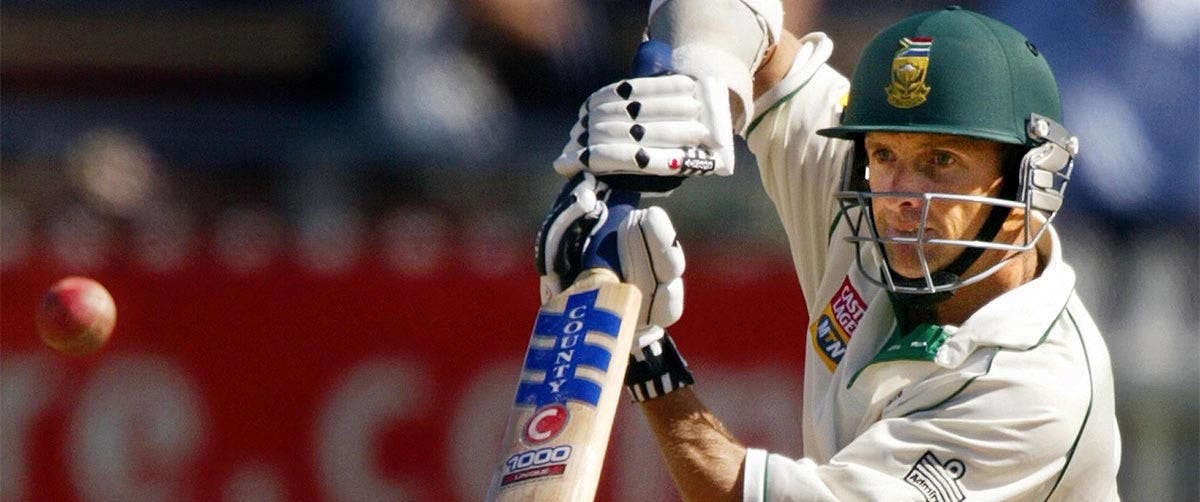
The second was a “determination or resilience to go through tough times”. As a batsman Kirsten, dogged and pragmatic, personified this. He recalled a specific innings against England in 1999 where his resilience was tested to the extreme:
“I was in such turmoil in my batting at that time. I was battling to make any headway and was in bad form and was probably down to my last innings before I was going to be dropped permanently from the team…so that innings dealt with a lot of things for me. One, it made me realise I could still score runs at the higher level of the game. Two, it was defining in the test series because we were in a spot of bother. And finally, it really got my career going again.”
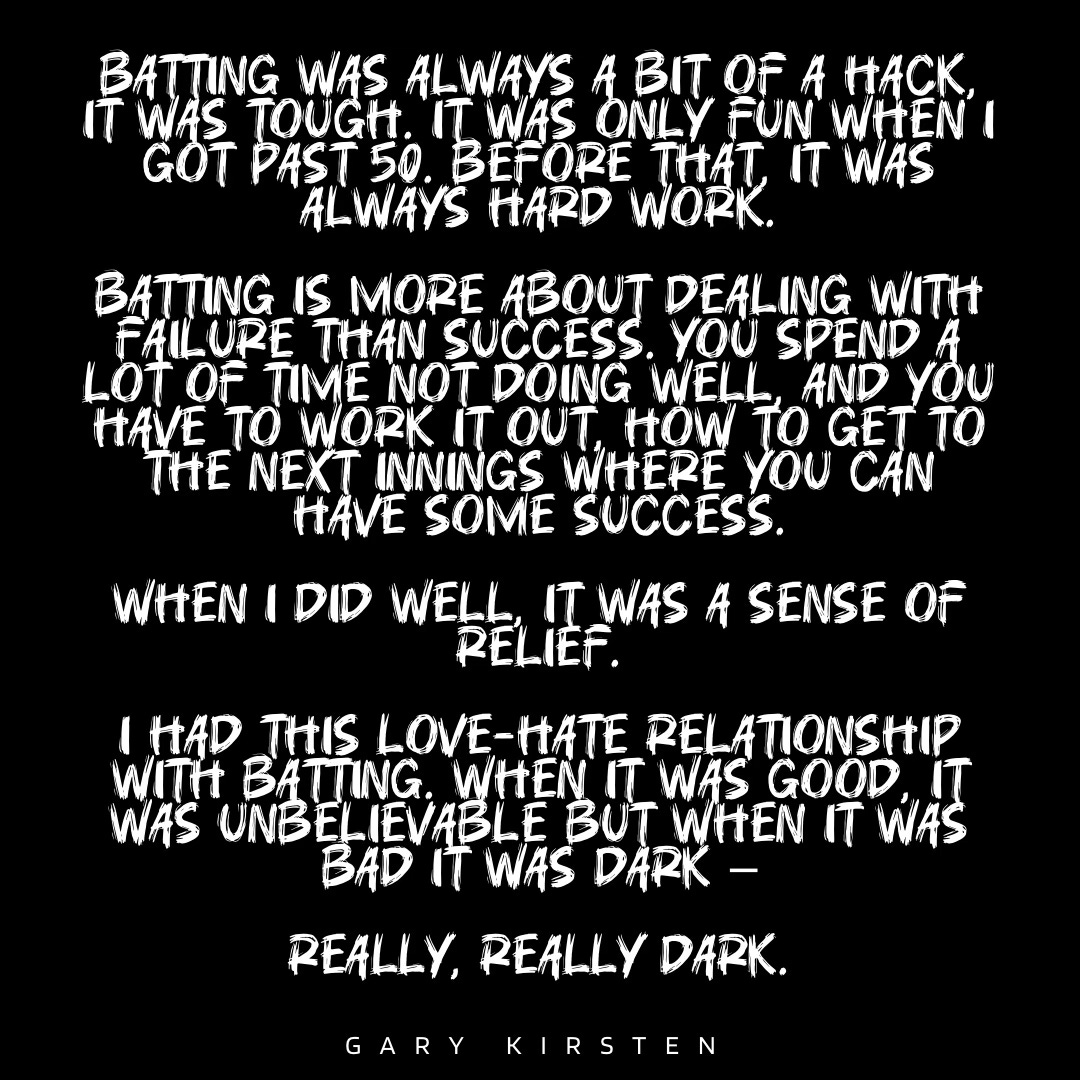
Kirsten batted for fourteen hours (878 minutes) and posted a total of 275 runs. Impressive numbers, but his personal experience of batting is dominated by dark accounts of resilience and struggle. These recollections illustrate a somewhat foreboding enjoyment of the process rather than the glory. He seems to revel in the moments of battle, and his experiences provide him with a unique insight for leadership:
Grand Final Ghosts
Michael Maguire’s playing career was curtailed by a neck injury after only eighteen top-flight appearances, resulting in him missing out on a Grand Final in 1994.
That disappointment never fully left him.
“I thought, ‘I am going to be part of a Grand Final’. I guess having that goal of wanting to be a head coach, I didn’t know it at the time, but I knew I wanted to be a part of a Grand Final in a big way. I didn’t know how it was going to be but obviously now I have been part of some special times in Grand Finals.”
Maguire’s disappointment over missing out in 1994 and his subsequent reaction to that setback is a clear example of the ‘fanatical reaction to challenge’ that has been found to be a common trait in elite athletes.


After the initial period of disappointment and reflection, he found an intense level of motivation emerged from the setback, an opportunity lying under the cloak of failure.
As you begin to get a sense of Maguire’s personality, it will not come as a shock that he describes himself as a bad loser, citing his competitive upbringing and will to win and how, at times, that leads to him confronting and challenging those around him:
“I don’t like losing. It is one thing I’ve had from a young age…I always wanted to win. Sometimes people see my personality as quite intimidating because I do not accept losing. Everyone has got to be winning at their roles. If they are not, I am honest about it and I’m very open to a discussion with whoever it is.”
Endurance Before Recognition
Across these stories, resilience is not framed as a mindset or a skill. It looks closer to endurance. Staying in the work without reassurance. Continuing without clarity. Tolerating uncertainty longer than most.
This echoes broader thinking on perseverance and grit, where sustained effort over time, rather than motivation or talent alone, is linked to long-term success. What these stories add is texture. They show how unglamorous that effort feels from the inside.
This is resilience before it is named. Over time, experiences like these are what leaders begin to recognise, refine, and eventually work on more deliberately.

If you have 5 minutes, spend some time reflecting on the questions below and how this all applies to you:
Reflection Questions
Where have you had to keep going without reassurance or feedback?
Which early setback still shapes how you approach leadership today?
How do those early experiences show up in how you respond to challenge now?
Next Week
Next week we step back and look across these stories. The leadership ingredients that keep appearing, often without the leaders themselves naming them. Not models or labels, but the patterns that quietly shape how leaders behave.
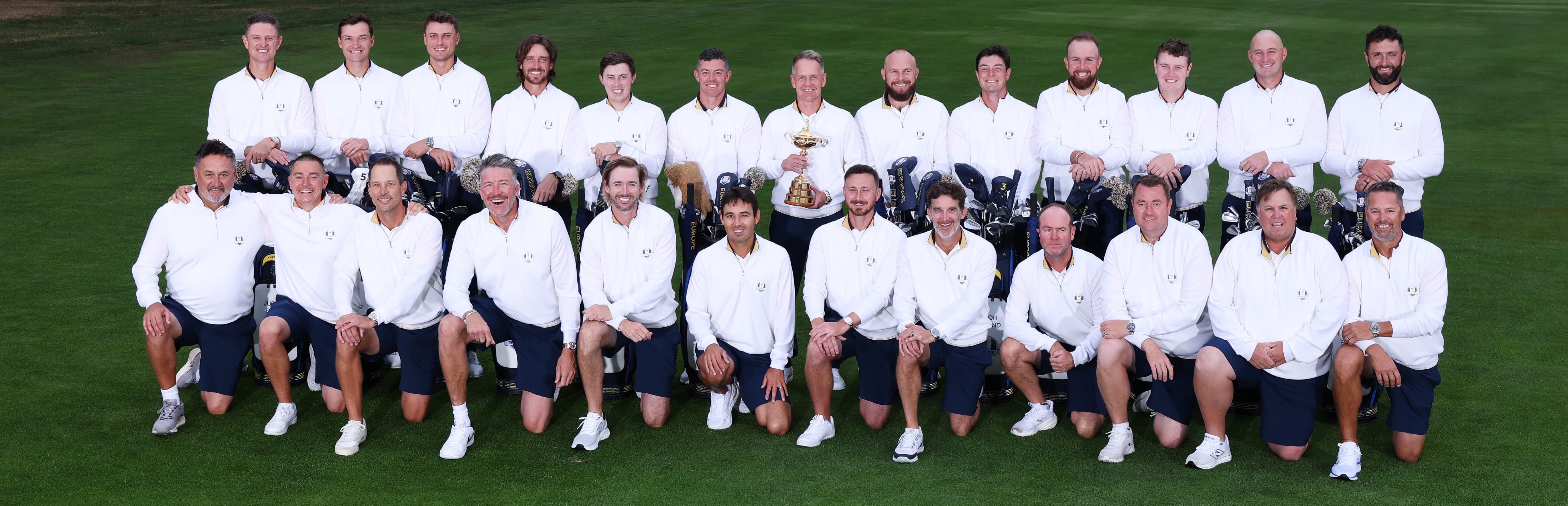
I’ll also be starting to explore the common traits of some of the teams I’ve been fortunate to see up close, including Wigan Warriors and Team Europe.
Thanks for reading - and for being part of this space.
If there’s a question, challenge or idea you’d like me to explore in future posts, just hit the button below and let me know
Have a great weekend!
Tom